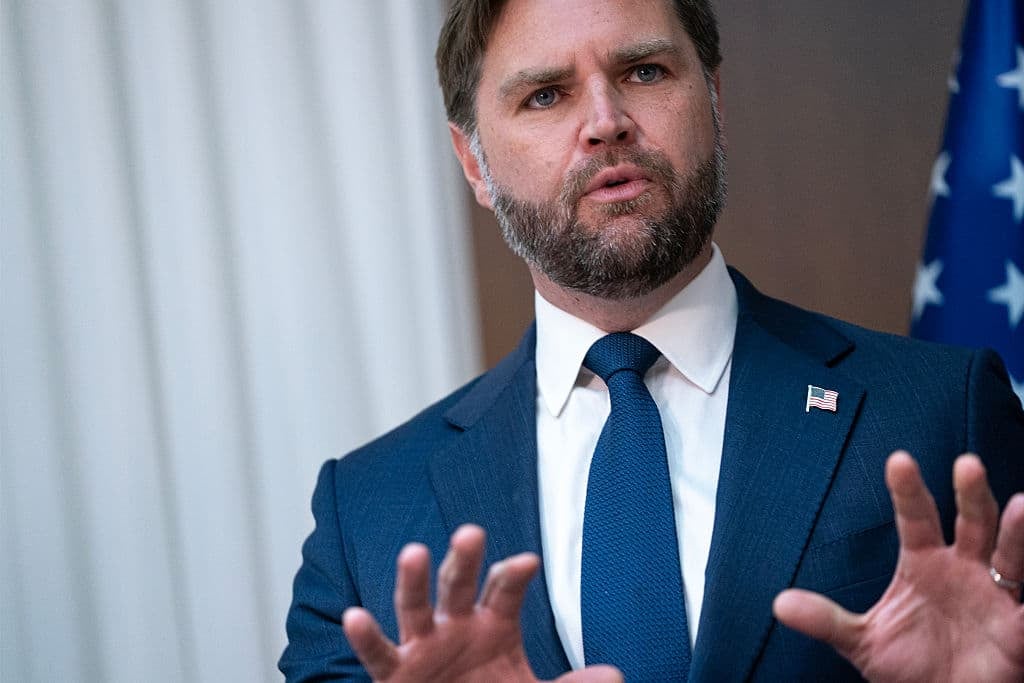
Vice President JD Vance went on television Monday morning to say something remarkable: the United States and Iran have already signed a peace agreement ending three and a half months of war. Not will sign. Have signed.

The signature, he told ABC’s Good Morning America, was digital — affixed over the weekend, ahead of a formal ceremony scheduled for Friday in Switzerland. Whether that digital signature covers the full agreement, or merely a memorandum of understanding, or a framework that still needs filling in, Vance did not make clear.
That ambiguity matters. Because if a document has been signed, the obvious next question is why no one has seen it. Vance promised the text would come later this week. Until it does, the questions multiply. Did Sunday’s signing trigger the opening of the Strait of Hormuz and the lifting of the American blockade on Iranian ports? Did it start the clock on a 60-day window for technical talks, or does that wait for Friday?
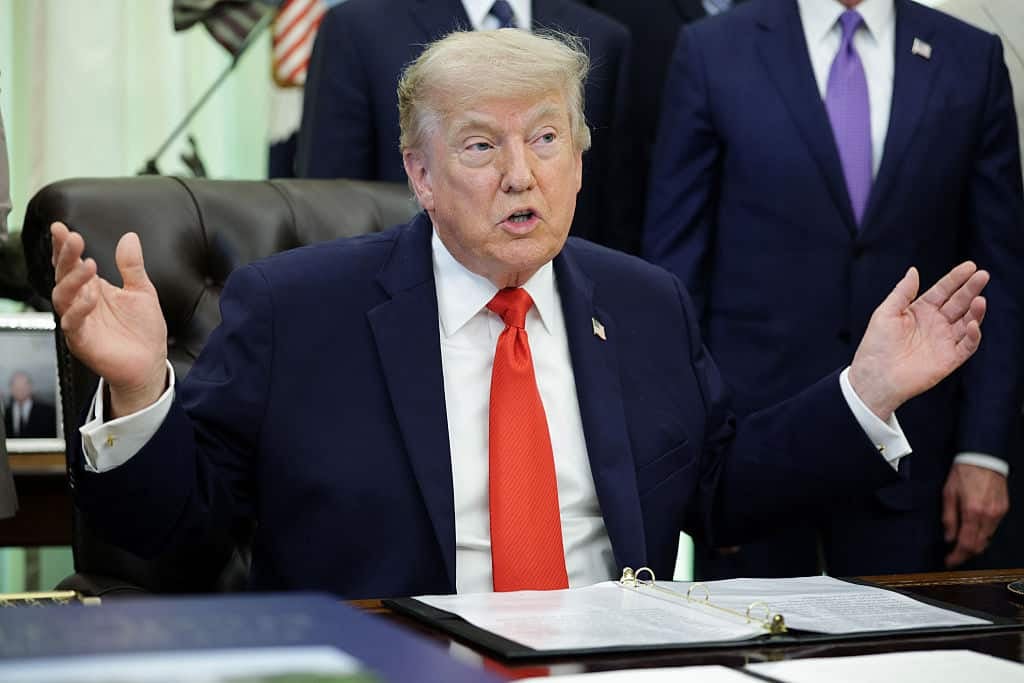
President Trump, who has said the strait opens Friday, will discuss the logistics of clearing its mines when he meets G7 leaders in France this week. He was already in a celebratory mood. “Ships are starting to move, many loaded up with Oil, out of the Strait of Hormuz,” he wrote on Truth Social.
Vance, meanwhile, spent the morning doing two things at once: urging caution about Iranian reports describing the deal, and pushing back against members of his own party uneasy about one detail in particular — that Iran might receive reconstruction money.

He confirmed the number. Iran would have access to a $300 billion reconstruction fund if it ends its nuclear program. But not a dollar of it, he insisted, would be American.
“That’s the sort of thing they could have access to, funded by the Gulf Cooperation Council, so long as they honor their end of the obligation,” Vance told “CBS Mornings.” “We absolutely are open to the GCC countries investing in the reconstruction of Iran only if Iran ends their nuclear program.” On “GMA” he was blunter still: “Not a single dollar of American money will go to Iran.”
Vice President JD Vance says that the deal between the U.S. and Iran “ensures that Iran will never have a nuclear weapon, while simultaneously opening the Strait of Hormuz.”
The vice president shares more details about the agreement, including some of the obligations Iran will… pic.twitter.com/MaUZQWP3ZG
— CBS Mornings (@CBSMornings) June 15, 2026
Any benefit, he said, comes only after Tehran hits benchmarks on uranium enrichment.
Not everyone in the President’s camp is reassured. Sen. Lindsey Graham, usually a reliable Trump ally, called the fund “tone deaf.” His comparison was sharp: “It would be akin to a Marshall Plan for Germany with the Nazis still in charge.”
Vance answered the senator directly. “I caution Lindsey Graham and anybody else not to believe the hard-liner propaganda in Iran, but to believe what’s actually in the agreement,” he said. “We’ll be releasing the text this week, and what everybody will see is that Iran doesn’t get a dime of money unless they perform their obligations. The money that we’re talking about is fundamentally sanctions relief. We’re not giving them American money.”
Vice President JD Vance joins "GMA" live to discuss the U.S.-Iran agreement announced by President Trump. pic.twitter.com/S1IFvsVv7d
— Good Morning America (@GMA) June 15, 2026
And here the optimism runs into the small print.
Trump has promised the strait will stay “permanently” fee-free. But Iran’s Foreign Ministry spokesman, Esmail Baghaei, allowed Monday that while Tehran wouldn’t collect tolls, it might still charge fees “in exchange for the services that are provided.” A toll by another name is still a cost.
Vance, to his credit, did not pretend otherwise. “There are a lot of very important details to figure out that we’re actually going to sit at the table and discuss together,” he conceded to CNBC. “Our expectation is that the strait is going to be opened in a toll-free way for the long term. And that’s the sort of thing that we’re going to figure out in these technical negotiations.”
VP Vance praises President Trump's peace deal with Iran.
President Trump is the dealmaker-in-Chief! pic.twitter.com/XRCYXmt6ck
— Libs of TikTok (@libsoftiktok) June 15, 2026
So there it is. A deal that is signed but unseen. A strait that is open but maybe not free. A peace that everyone has announced and no one has yet read.
Vance wants patience and caution.
Let’s see what the week brings.