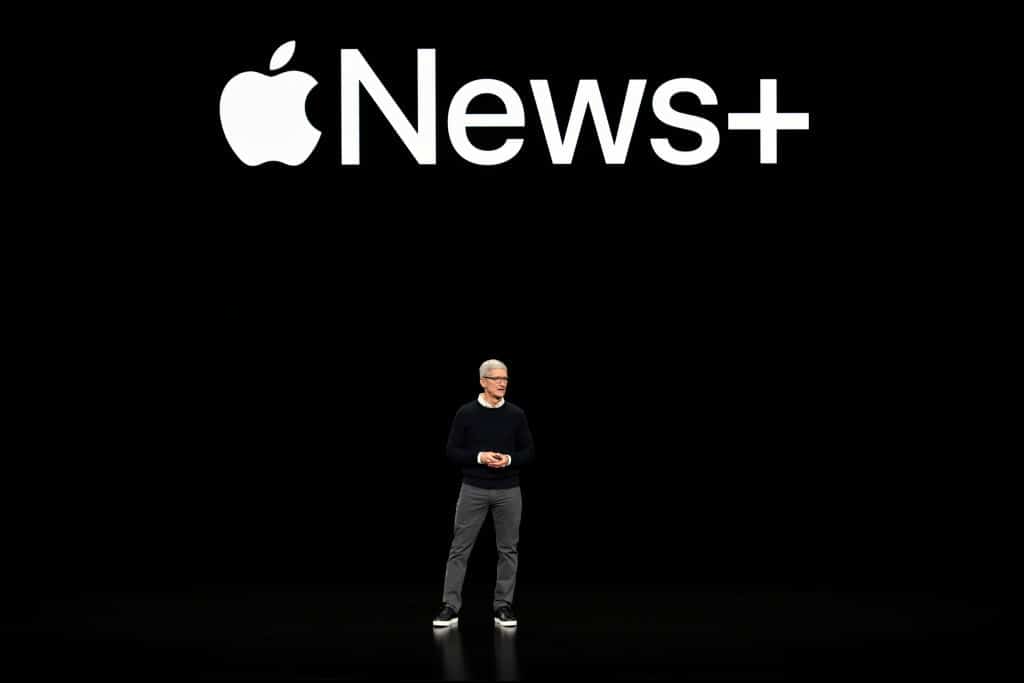
Here is a small, sturdy fact that ought to bother more people than it does: the news that lands in your pocket every morning was not chosen by you. It was chosen for you, by an algorithm at Apple or a formula at Google, and lately those choices have had a shape. A political shape.

The Media Research Center has been at this for months now, and the pattern holds up story after story. When a Democratic Senate candidate in Maine turned out to have a Nazi-linked tattoo and a Reddit history nobody wanted to explain, Apple News and Google News found, somehow, nothing to say about it — not for seven months.
When a progressive candidate in Michigan ran into questions about the “physician” title he liked to use, or the streamer he liked to campaign with, the silence held there too.
But when Republican candidates in Texas ran into trouble, the feeds lit up fast.
MRC clocked it: during one stretch, roughly seventy percent of what these apps pushed came from left-leaning outlets. One percent came from the right.
Now comes the next layer of this, and it is the more interesting one. It isn’t only which stories get told — it’s which outlets get to tell them.
Publications that endorsed the Democratic presidential ticket keep showing up in the top twenty. Publications that didn’t, or that lean the other way, mostly don’t.
This is not commentary being buried. This is the plumbing of the news itself — who gets read, who gets seen, who gets to exist in the feed at all.
MRC President David Bozell put a number on it that’s hard to shrug off: Apple and Google, he said, are steering tens of millions of users toward outlets that have endorsed a Democrat for president 31 times over the past 40 years — and a Republican zero times. He said it plainly: these companies claim to run neutral “public squares,” but the numbers say otherwise. And he didn’t stop at sloppy or lazy. He called it engineered — a system built, he said, to quietly tilt the debate, shield voters from conservative reporting, and hand left-leaning outlets the role of default authority on the news.
That’s a serious charge, and it deserves to be treated as one — not waved off as the usual complaint from the usual corner.
Defenders of the platforms will say: it’s an algorithm, not a person, nothing to see here. But an algorithm is written by people, tuned by people, and left running by people who could fix it if they wanted to. Neutrality is a choice a company makes and keeps making. Silence, seven months of it on one story, is also a choice.
Here is why this matters more than the usual media-bias complaint…
Most Americans no longer go looking for their news. It comes to them, pushed onto a lock screen, sorted by a machine they never see and never voted for. That machine now appears to have opinions about who should win elections. It has decided some scandals are stories and others are not stories at all.
It has decided, in effect, which newspapers count.
A country that lets two companies quietly referee its information diet is a country that has outsourced something it should never outsource.
Nobody elected Apple. Nobody elected Google. And yet here they are, thumbs on the scale, telling millions of people what happened in the world today — and, just as important, what didn’t.
The fix isn’t complicated to state, even if it’s hard to enforce: publish the methodology, open the feed to outside audit, treat “we don’t do bias” as a claim that needs proving, not a slogan that ends the conversation.
Until then, assume the sorting is not an accident. It rarely is.