For two months the cease-fire held, in the way these things hold in that part of the world — which is to say uneasily, with everyone watching the door. Then over the weekend the door opened. Iran sent three waves of missiles toward Israel. Israel struck back at launchers and petrochemical plants inside the Islamic Republic.

And the President, who had been quiet, spoke.
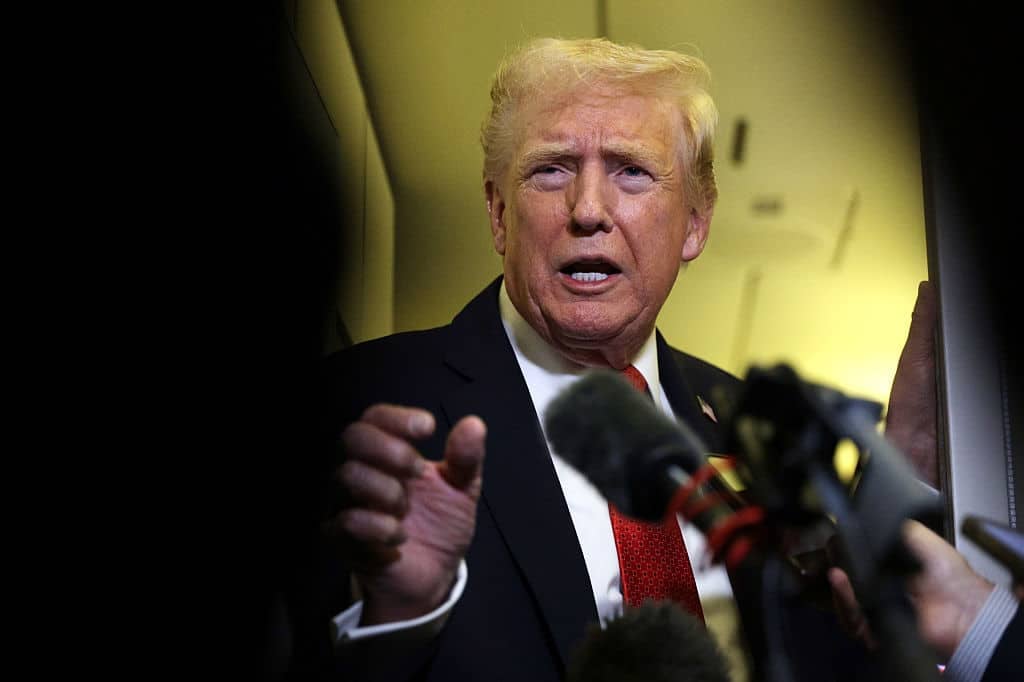
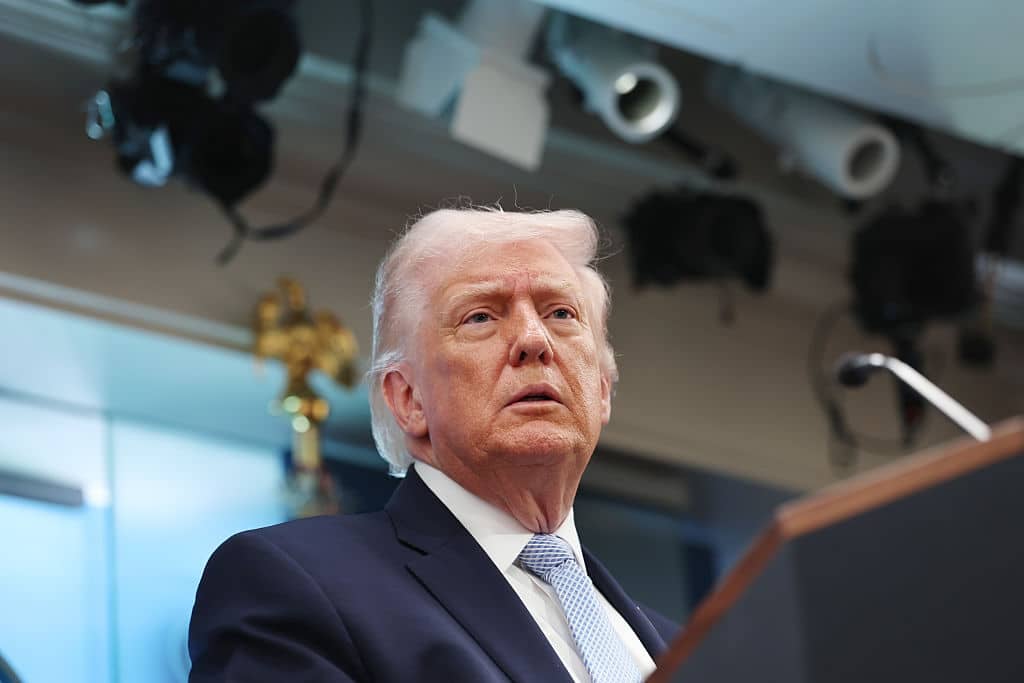
“Israel and Iran must immediately stop ‘shooting,'” Trump wrote on TRUTH Social — his first public words since the two enemies began trading blows in the worst escalation in more than two months.
By Monday, Iran’s joint military command said it was halting offensive operations.
But it said so with a warning. Any further “aggression and hostile acts,” it said — including against Hezbollah in southern Lebanon — would bring “much more severe and crushing measures than before.”

Trump, for his part, sounded almost sunny. In a second post, he said both sides were “looking to do an immediate CEASEFIRE!” The peace talks, he wrote, were “proceeding, subject to ignorance or stupidity getting in its way.” The blockade, he added, stays “in full force and effect, until a ‘Final Deal’ is reached. Things should move quickly.”
There was no sign the United States meant to restart its own operations against Tehran. And last week, on The Post’s “Pod Force One,” Trump said it was “unlikely” the blockade on Iranian ports would still be standing by Labor Day.
What actually happened overnight was loud and specific. Explosions in Isfahan, Karaj, Tabriz, Tehran. A petrochemical plant hit in Mahshahr. A military center struck in Tabriz, where officials said no one was killed. There was no immediate word of casualties anywhere, in the most intense exchange since the U.S.-Iran cease-fire took hold on April 8.
The Revolutionary Guard, never modest, called its own assault on the Tel-Nof and Nevatim air bases “Operation Nasr,” and said it had answered “the child-killing Zionist regime’s missile aggression.” Its intelligence arm graded the night “100 out of 100.” This is the language of a regime talking to itself.
Underneath it all sat a familiar accusation. Tehran had warned Sunday it would retaliate for an Israeli strike on Hezbollah targets in the southern suburbs of Beirut — and it blamed Washington as much as Jerusalem. “No one believes that the Israeli regime would take any action without coordination with the United States,” the Foreign Ministry’s Esmail Baghaei said. America, he warned, “will also be responsible for the consequences.”
And so the region holds its breath again. Iraq closed its airspace for 72 hours, then reopened it Monday once Iran’s military made its announcement. Damascus International stays shut until 11 p.m. Israel’s skies remain open. The tit-for-tat threatens to pull the whole Middle East back toward full-scale war.
That is the trouble with a cease-fire built on warnings. It can end the way it began — with everyone insisting they want peace, and no one quite willing to lower the finger.