There’s a certain American phrase we’ve stopped saying out loud: standards.

Not preferences. Not vibes. Standards.
And when you drop them — quietly, bureaucratically, with a shrug — you don’t get a gentler society. You get chaos with paperwork. You get tragedies no one wants to own.
That’s why this week’s news from federal transportation officials is so welcome.
In a three-day, 26-state enforcement surge — Operation SafeDRIVE — inspectors conducted more than 8,200 checks and took 704 drivers out of service. They pulled 1,231 vehicles off the road as unfit. They made 56 arrests. And they cited roughly 500 truckers for failing English proficiency standards.
“Operation SafeDRIVE shows what happens when we work together with our law enforcement partners to pull unqualified drivers and vehicles off American roads,” Transportation Secretary Sean Duffy said.
“We need a whole-of-government approach to ensure the Trump administration’s strong standards of safety are in place to protect American families and reduce road accidents.”
This wasn’t some ideological crusade. It was the unglamorous work of governance — people at weigh stations, clipboards and checklists, pulling the thread on what looks routine until it isn’t.
And it isn’t.
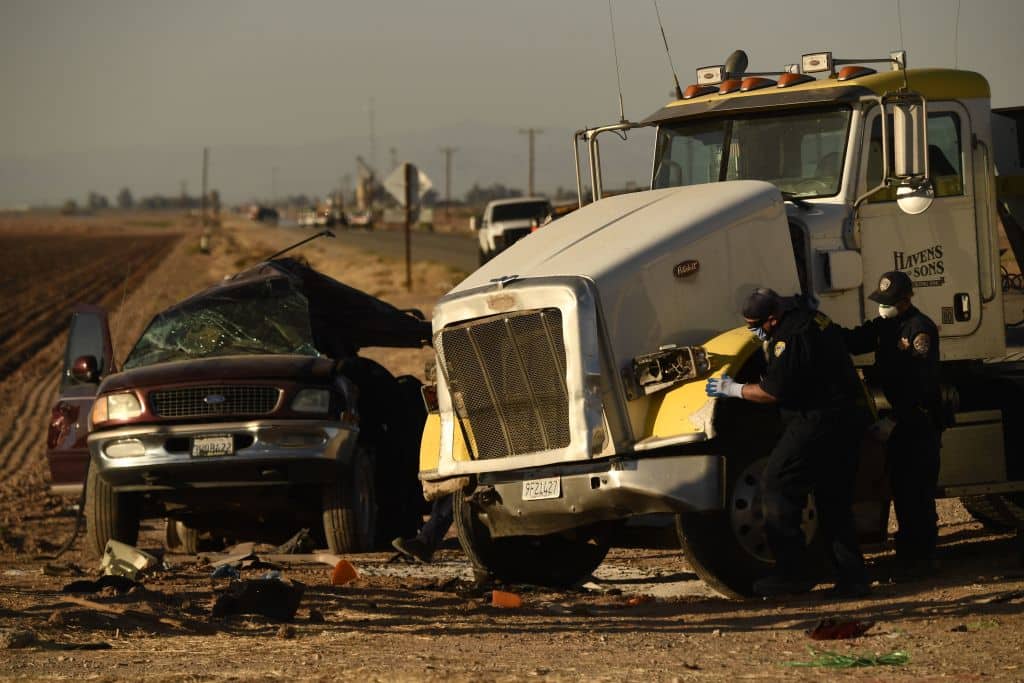
The sweep comes just days after a deadly crash in Jay County, Indiana, that has reignited questions about vetting, licensing, and enforcement. You can argue the politics of it. You can argue the borders. You can argue who’s responsible for which database and which policy.
But you cannot argue the basic point: when you’re piloting tens of thousands of pounds of steel down a public highway, the bar should not be optional.
English proficiency isn’t a cultural preference. It’s an operating requirement — signs, instructions, emergency commands, roadside warnings, the quick barked order that keeps a bad moment from becoming a catastrophe. It’s a safety tool, like brakes, like mirrors, like a sober driver.
The deeper question is the one nobody wants to say at the press conference: how did we let so many “unqualified” drivers and “non-roadworthy” vehicles get this far onto American roads in the first place?
Because the story isn’t only that a crackdown happened — it’s that it needed to.
And that, in modern America, feels like the headline all by itself.
When standards disappear, consequences don’t. They just show up later — at 65 miles an hour.