Something is happening in the Levant, and it is worth paying attention to.

This week, President Trump announced a three-week extension of the ceasefire between Israel and Lebanon, following a day of high-level talks in the Oval Office aimed at turning a fragile pause into something that might, at last, hold.
The extension came after Trump hosted senior representatives from both countries at the White House. He called the meeting “a great” success and described the extension as “the beginning of something very important.” That is large language for a small increment of time. But the language is the point. The administration wants it understood that three weeks is not the ceiling. It is the floor.
The United States is signaling a more active role in shaping what comes next. Trump said Washington will work with Lebanon to strengthen its ability to defend itself against Hezbollah, the Iranian-backed group at the center of the conflict. That is not a throwaway line. It is a strategic bet — that a stronger Lebanese state is the surest path to a weaker Hezbollah, and that a weaker Hezbollah is the surest path to peace with Israel.
The current momentum builds on an earlier round of U.S.-brokered talks on April 14, the first direct engagement between Israeli and Lebanese officials in decades. Those talks produced an initial 10-day ceasefire just two days later. Now the goal is to turn a temporary pause into something durable.

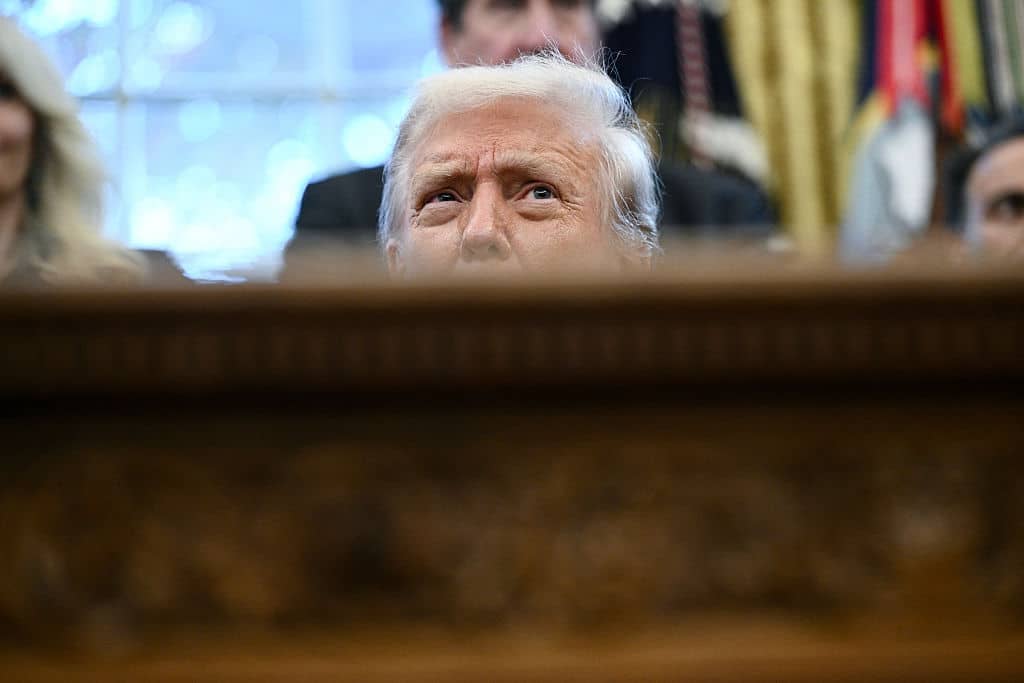
After the meeting, U.S. officials and participating envoys joined the president in the Oval Office to outline the next phase. Secretary of State Marco Rubio credited Trump’s hands-on approach, saying the added time creates space for continued diplomacy.
“It gives everybody time to continue to work on what’s going to be permanent peace between two countries that want to be in peace,” Rubio said. He added that negotiators expect to be “even closer” to that goal in the coming weeks.
“I think there’s a very good chance of having peace,” Trump said, pointing to Hezbollah as the shared adversary driving a rare alignment between the two sides.
That alignment is the story. Israel and Lebanon have not sat across from each other in any meaningful way in a generation. They are doing so now because they share a problem, and because an American president decided to make the problem his own.
The administration is already looking ahead.
Trump indicated he hopes to host the leaders of both countries in Washington soon. If that happens, it would mark a significant escalation in diplomatic engagement — the kind that, decades from now, historians either circle on a timeline or forget entirely.
Three weeks will tell us which.