Welles Crowther was 24 years old, and he worked in finance, and he wore a red bandana under his work shirt because his father, a volunteer firefighter, had given it to him when he was six. He used to say it was going to help him change the world. He said it, apparently, more than once. He was a kid who meant it.

On September 11, 2001, he was on the 78th floor of the South Tower when the second plane hit. He could have gone down. He went the other way.
He found people in the smoke — burned, blinded, certain they were about to die. He put out fires with his bare hands and his jacket. He carried a woman on his back down seventeen flights of stairs. Then he went back up. And he did it again. And again. Survivors who never learned his name described him only as “the man in the red bandana,” because that was the last clear thing they saw before he led them out of the dark.
He made it out himself once, or so witnesses believe.
Then he turned around one more time.

He was in the lobby when the tower came down.
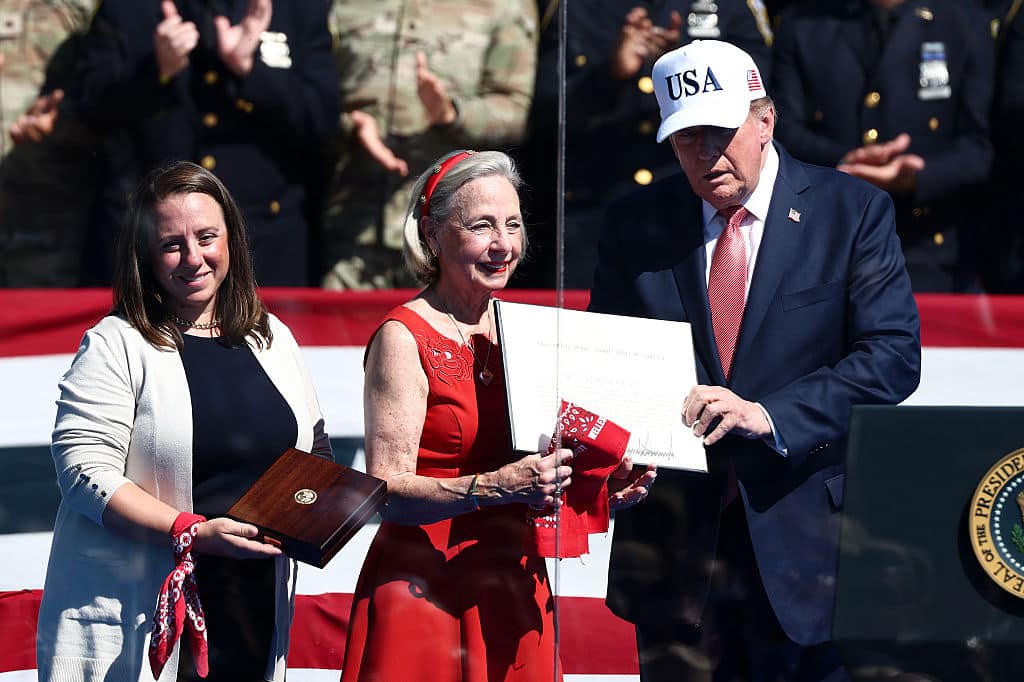
Twenty-five years later, in a ceremony in Washington tied to Tunnel to Towers’ “Steel Across America” tour — a 21-foot beam from the South Tower, carried across the country to mark the anniversary — President Trump gave Welles Crowther the Presidential Medal of Freedom. His mother, Alison, accepted it. So did his sister, Paige.
Alison Crowther stood up afterward and thanked the President for what she called an enormous honor, and thanked Congressman Mike Lawler for pushing the recognition, and thanked Frank Siller of Tunnel to Towers, who has spent twenty-five years making sure this country doesn’t get too comfortable forgetting.
Here is the thing about Welles Crowther. He wasn’t a firefighter. He wasn’t trained for any of it. He was a twenty-four-year-old equities trader who happened to know CPR because he’d been a volunteer firefighter back home in Nyack, and who happened to be wearing his father’s bandana that morning, and who happened to decide, in the space of about ninety minutes, that other people’s lives mattered more than his own.
That’s not a policy. That’s not a strategy. That’s just what some people are made of.
A medal doesn’t change what happened on the 78th floor. It can’t. What it can do is make sure the name gets said out loud again, in a room full of people, twenty-five years on — so that somewhere, some young man or woman hears the story of the guy in the red bandana and files it away, quietly, in case it’s ever needed.
It usually isn’t. Until, for somebody, it is.
On September 11, 2001, when terror struck our nation, Welles Remy Crowther did what he was raised to do: he ran toward danger and answered the call, displaying a heroism that would come to define his life. Wearing his trademark red bandana, he saved upwards of 18 lives that day… pic.twitter.com/R2H5V26iOX
— Congressman Mike Lawler (@RepMikeLawler) September 8, 2026