There is something almost classical about what Washington did Friday. An act of statecraft that is also, in its way, a statement of belief.

The State Department announced it will pay up to $10 million to any Iranian citizen who comes forward with information on the whereabouts of senior leaders in the Islamic Republic’s security apparatus.
Those who help could also earn something worth more than money: a path to American shores.
The program targets ten figures tied to the Islamic Revolutionary Guard Corps, an organization the United States government has designated a terrorist enterprise.
The names are significant.

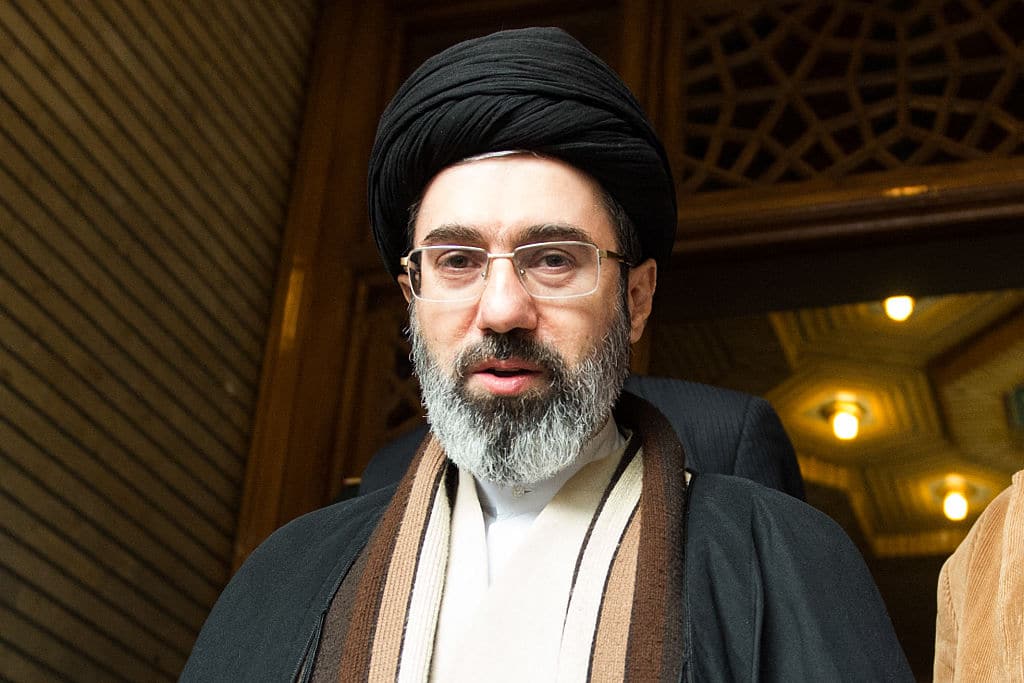
Iran’s supreme leader, Mojtaba Khamenei, is on the list. So is national security adviser Ali Larijani, Interior Minister Eskandar Momeni, and Intelligence Minister Esmail Khatib.
Some targets are identified only by title rather than name, a quiet testament to the chaos already consuming the regime’s upper ranks following a series of airstrikes that have killed several senior officials.
The information, officials said, can be submitted through a Tor browser tip line or via the encrypted messaging app Signal. The regime has ears everywhere, but not, apparently, everywhere at once.
The imagery will not be lost on students of recent history. It echoes a tactic from the early days of the Iraq War, when the Pentagon distributed a now-famous deck of playing cards bearing the faces of Saddam Hussein’s top lieutenants. That deck had a way of being completed.
What makes this moment notable is not just the mechanics of the program but its underlying message, one directed not at the regime itself but at the Iranian people it has held in an iron grip for nearly half a century.
Washington is saying, in effect: We know you are in there. We know some of you are watching. And we are making you an offer.
It is a bet on human nature.
On the proposition that loyalty to a failing theocracy has its limits.
That fear eventually gives way to calculation.
And that men who live behind walls are not as protected as they imagine.
Whether it succeeds is another matter.
But as a statement of American intent, it is hard to misread.
The cards are on the table.
Got information on these Iranian terrorist leaders?
Send us a tip. It could make you eligible for a reward and relocation. pic.twitter.com/y7avkqdGWw
— Rewards for Justice (@RFJ_USA) March 13, 2026