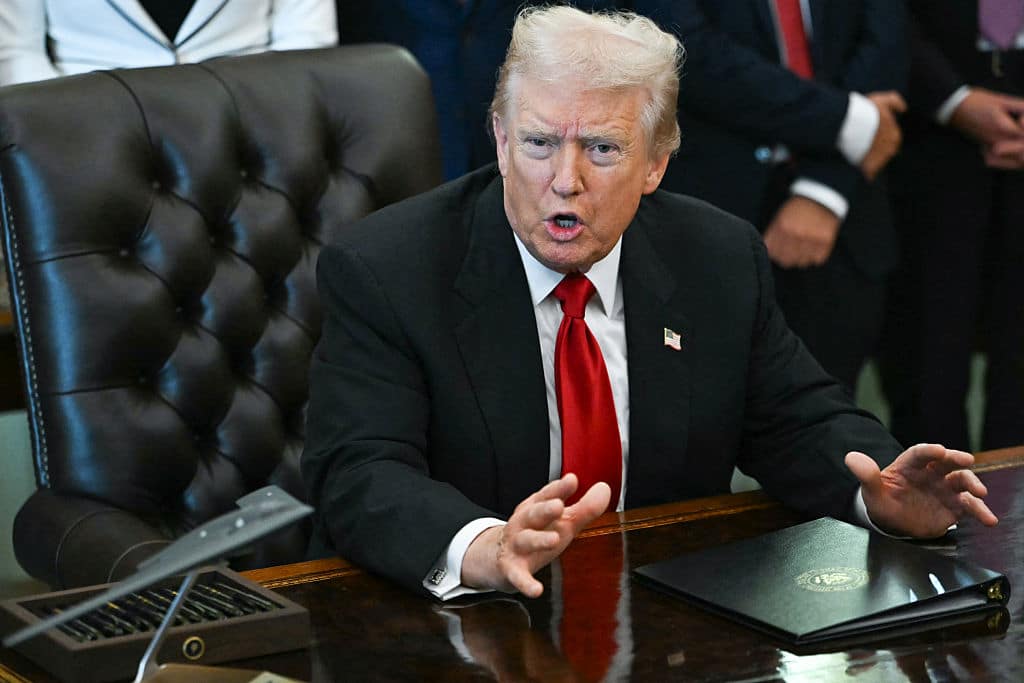
President Donald Trump stood in the Cabinet Room of the White House on Friday, flanked by Hungarian Prime Minister Viktor Orbán, and delivered his MAGA wishlist with a crisp urgency that left little doubt where his head is these days: The Senate filibuster.

“You know the Democrats are going to [get rid of the filibuster]. So why aren’t we doing it? I think only a foolish person would be against that,” he declared.
“I am totally in favor of terminating the filibuster and we would be back to work within ten minutes of that vote taking place,” he added.
WATCH: @POTUS lists some major victories that could be achieved if Republicans terminate the filibuster:
— Voter ID
— No mail-in voting
— Ending no cash bail
— No welfare for illegals"It doesn't make any sense that a Republican would not want to do that." pic.twitter.com/9KobeAZbKt
— Rapid Response 47 (@RapidResponse47) November 7, 2025
The list of policies he rolled off sounded like a campaign litany, not a luncheon conversation: voter ID, no mass mail-in voting, ending cash bail, no men in women’s sports, no welfare for illegals. Policies once relegated to fringe talk have now been placed at the center of the new Republican agenda — and Trump wants the procedural path cleared.
Here’s where the tension lies: the filibuster remains, for now, the Senate’s institutional firewall — and even as the president urges action, top Senate Republicans are digging in their heels. Senate Majority Leader John Thune said, “I know where the math is on this issue in the Senate, and it’s not happening.”
Senator Thom Tillis dismissed the idea outright: “I’d never vote to nuke the filibuster,” he said.
What Trump sees as a brake on change, others see as a bulwark against chaos. The shutdown that began on October 1 persists — and is now the longest in U.S. history.
If Trump gets his way and the filibuster falls, the legislative world as we know it doesn’t just tip—it flips. He promised “we would be back to work within ten minutes,” but others warn the result would be higher volatility in policy, politics, and power.
A clear choice, he says. A procedural rule that spans generations, they say. The battle lines are drawn.