Trump’s quieter weapon is doing the loudest work.

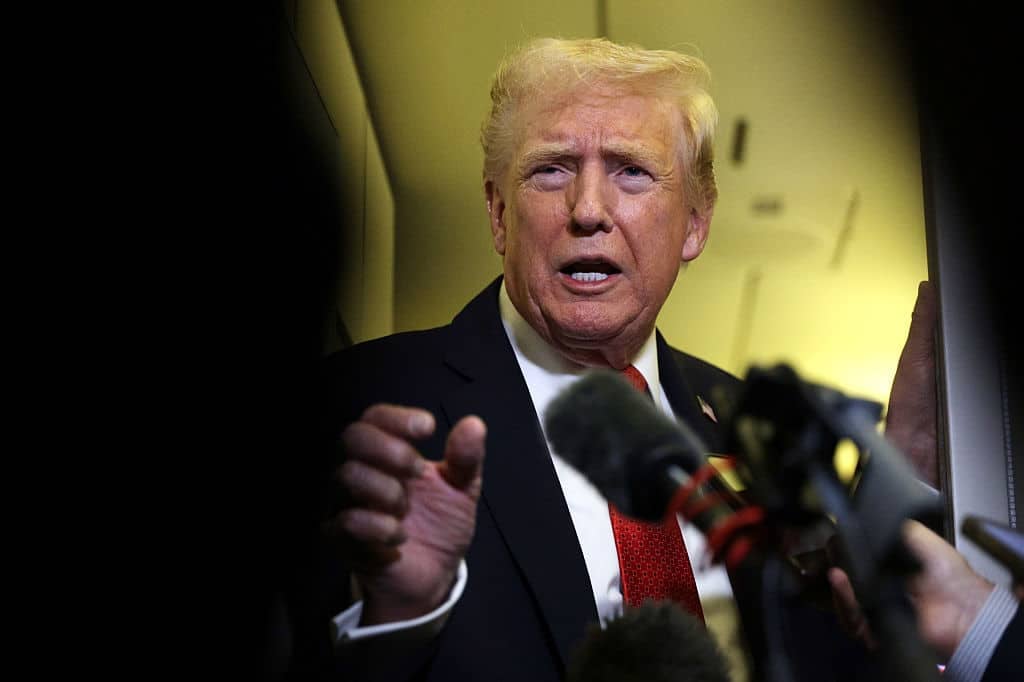
There is a subtle, quiet kind of power. That is the power President Trump described Thursday, standing on the South Lawn before boarding Marine One for Las Vegas, and it is worth listening to what he said.
“We have a very good relationship with Iran right now,” the president told reporters. “As hard as it is to believe, and I think it’s a combination of about four weeks of bombing and a very powerful blockade.”
Then came the line that deserves to travel.
“The blockade is maybe more powerful than the bombing, if you want to know the truth.”
BREAKING: President Trump reveals the next round of in-person peace talks with Iran could happen as soon as this weekend:
"The blockade has been incredible… They're unable to do any business because of the blockade."
"The combination of having no Navy, having no Air Force,… pic.twitter.com/VDNjyZwD4X
— Fox News (@FoxNews) April 16, 2026
He is not wrong. And the numbers are beginning to prove it.
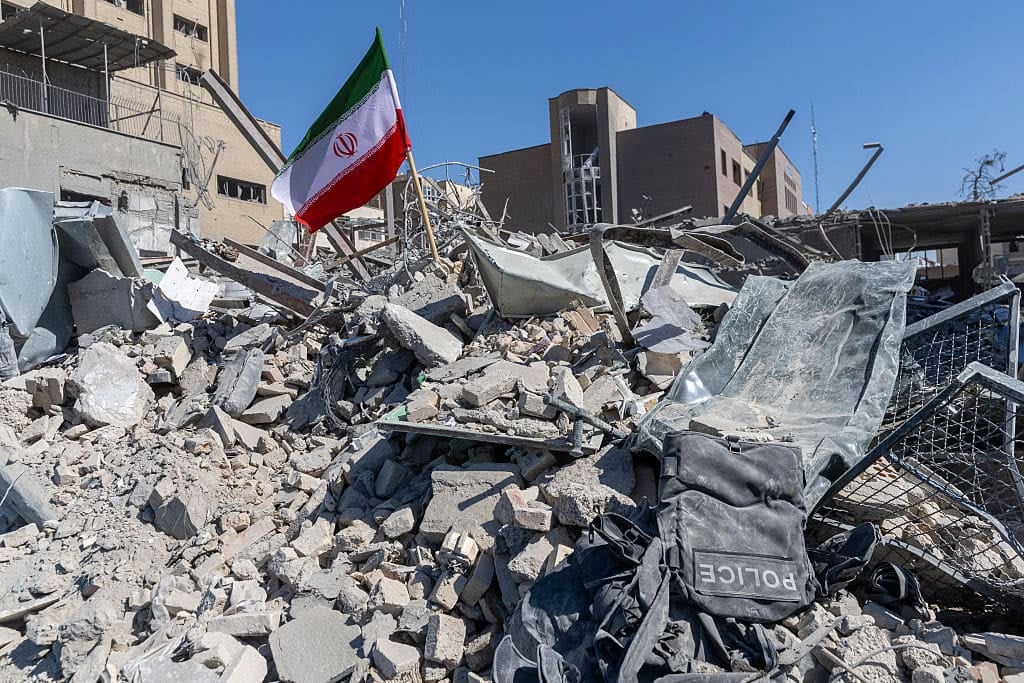
The U.S. Navy’s blockade of Iran’s ports, which took effect at 10 a.m. Eastern on April 13 after the Islamabad talks collapsed, has done in a day and a half what years of sanctions could not. U.S. Central Command chief Adm. Brad Cooper announced this week that roughly 90 percent of Iran’s economy runs on seaborne trade, and that in less than 36 hours, American forces had completely halted that trade, inbound and outbound.
More than 10,000 sailors, Marines, and Air Force personnel are enforcing the operation, and in the first 24 hours, six merchant ships complied with orders to turn around and re-enter Iranian ports. A U.S. Navy destroyer intercepted two oil tankers leaving Chabahar and told them, by radio, to go back.
They went back.
This is what leverage looks like when it is applied with precision.
Consider what Iran was doing before the blockade.
Tehran had spent six weeks tolling the Strait of Hormuz like a medieval river lord, charging up to $2 million a ship for passage and letting through only its chosen clients.
Iran earned nearly $5 billion in oil exports in the past month while it shut the strait for most other ships — roughly 40 percent more than it made before the war.
The mullahs were, in effect, being paid for their own aggression. That particular racket is now over.
The design of the operation is also more careful than its critics will admit. The blockade covers all Iranian ports in the Arabian Gulf and the Gulf of Oman, but not the Strait of Hormuz itself; traffic unrelated to Iran passes unimpeded.
It is aimed at the regime’s revenue, not at the world’s supply. That distinction matters. It is why, despite early jitters that sent Brent crude above $103 a barrel on the day the blockade was announced, oil prices have since eased on market expectations of a deal.
And a deal is precisely what may be coming.
The Associated Press reported Wednesday that Washington and Tehran have reached an “in principle agreement” to extend their fragile two-week ceasefire to allow more diplomacy.
Vice President JD Vance, who led the first round of talks in Pakistan alongside Steve Witkoff and Jared Kushner, is expected to lead the second. The president told Fox Business this week that the war is “very close to over” and that the Iranians “want to make a deal very badly.”
They want to make a deal because they have to. One U.S. analyst estimates Iran has roughly 13 days of oil storage capacity, after which it will have to shut down its oil fields — potentially damaging them. A regime that has spent decades selling menace abroad and austerity at home is now watching the meter run on both. The ayatollahs understand arithmetic, even if they prefer ideology.
There is something almost old-fashioned about the whole thing. Naval blockades are the oldest form of economic warfare — older than the republic itself. Jefferson used one. Lincoln used one. The British, who wrote the playbook, used one so effectively it helped bring down the Kaiser. What Trump has done is reach into that older, patient toolkit and pair it with the precision of modern air power. The bombs rattled Iran’s infrastructure. The ships are rattling Iran’s books.
Critics will say the blockade is illegal under maritime law. It is — technically — and analysts have noted as much. But Iran, which has been seizing tankers, mining waterways, funding proxies, and racing toward a bomb, is in a weak position to lecture anyone about the law of the sea. The world is watching a regime that made piracy a state policy now discover what actual enforcement looks like.
The president’s insight — that the blockade may be doing more work than the bombs — is the kind of plain observation that gets missed because it is plain. It does not come wrapped in a doctrine. It does not have a think-tank acronym. It is simply true.
Mr. Trump has been criticized for many things. Subtlety is not usually one of them. But there was a quiet kind of wisdom in what he said Thursday, and it is worth saying plainly: he has found a way to win this one without having to keep breaking it.
Sometimes the loudest weapon in the arsenal is the one that doesn’t make a sound.