At ten o’clock this morning, Eastern time, the United States Navy drew a line in the water. A blockade of Iranian ports and a partial blockade of the Strait of Hormuz went into effect. Whether the first American ships have yet moved to enforce it is unclear. But the order is issued. The line is drawn.

Vice President JD Vance led the American delegation. Pakistani mediators worked the room. It wasn’t enough. On the central question — Iran’s nuclear ambitions — there was no give.
There is reportedly still a diplomatic thread: Pakistan is pressing both sides to return to the table before the ceasefire lapses next week. It is a thin thread.
Iran’s response was swift and unambiguous. Tehran called the blockade illegal — piracy, by another name. The Revolutionary Guard declared the strait remains under Iran’s “full control” and open to civilian traffic. Military vessels, it said, would receive a “forceful response.”
And Iran issued a broader warning: if its own port traffic is choked, no Gulf port will be safe.
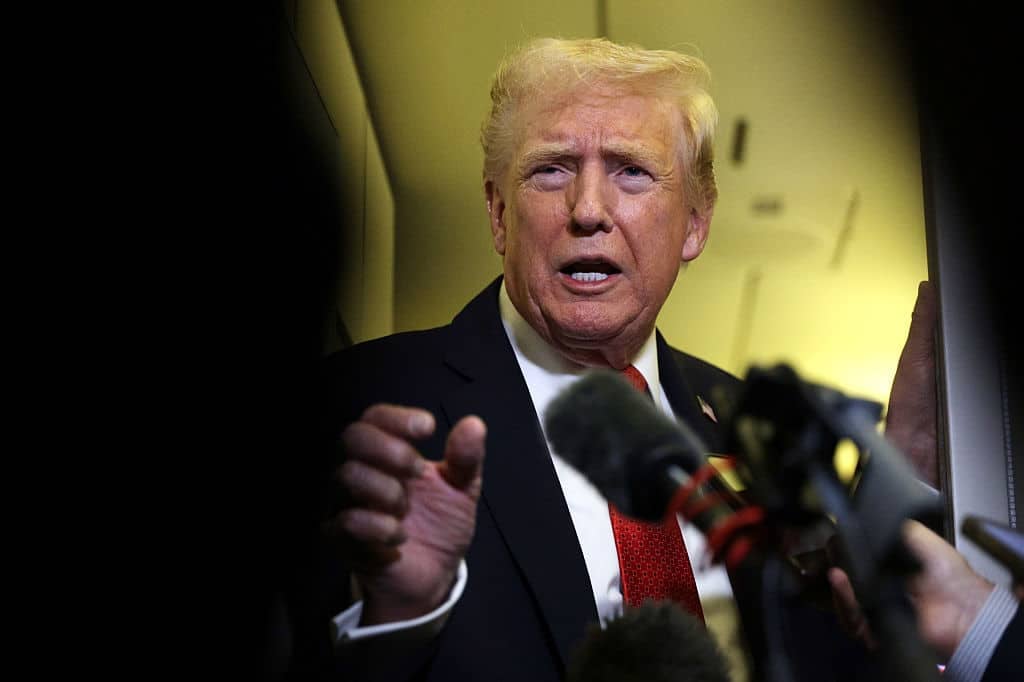
The President has been characteristically direct.
On Sunday, Trump instructed the Navy to intercept every vessel that had paid Iran a toll in international waters and to begin clearing the mines the Iranians had laid in the Strait.
On Monday, he went further: any ship that challenges the blockade will be, in his word, “immediately ELIMINATED.” He noted that 158 Iranian naval vessels now rest on the seafloor. He added, of what remains: “It is quick and brutal.”
The American naval presence in the region is considerable. The USS Abraham Lincoln carrier group, eleven destroyers, and the USS Tripoli amphibious group are operating in the Middle East — positioned, the Navy confirmed, in the North Arabian Sea and the Red Sea.
The USS Gerald Ford and additional destroyers hold position in the Mediterranean.
On Sunday, two guided-missile destroyers — the USS Frank E. Peterson and the USS Michael Murphy — passed through the Strait itself, tasked with clearing Iranian mines.
What happens next is not yet written. A week remains before the ceasefire expires. Pakistan is still working the phones. But the naval blockade is no longer a threat. It is a fact. And facts, in the Strait of Hormuz, have a way of forcing choices.