Something has shifted in Washington, and not for the better. The government shutdown — once a rare and dramatic last resort, a sign that the system had genuinely broken down — has become routine. A tool. A tactic. A lever pulled with increasing comfort by those who calculate that chaos serves them.

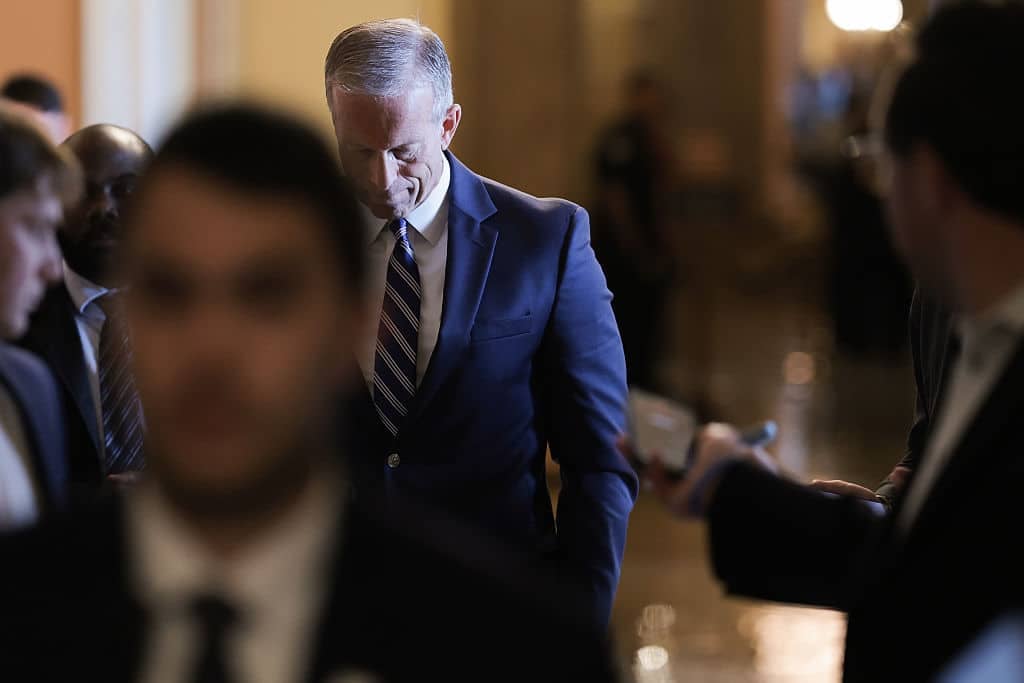
Senate Majority Leader John Thune, R-S.D., wants to change the calculus. Quietly, without fanfare, he set up a vote this week on a resolution from Sen. John Kennedy, R-La., that is simple in concept and pointed in implication: if the government shuts down, senators don’t get paid.
Kennedy, who pushed Thune to bring it to the floor, offered his characteristic understatement when asked how he felt. “He did it,” Kennedy said of the majority leader, “and I think he’s a fine American.”
The measure is one of several proposals now circulating as Republicans search for a pressure valve — some mechanism to make shutdowns painful enough that no one reaches for them lightly.
Sen. James Lankford, R-Okla., has introduced the Prevent Government Shutdowns Act, which would automatically fund the government in two-week increments while Congress works toward a deal.

“We need to pass it,” Lankford said, “so we never have a moment like this again. We will have disagreements. It’s America. But we should not have federal workers and programs stop because we’re having a disagreement. Let’s have the fight. But let’s keep going.”
The urgency is real. In Donald Trump’s second term alone, Congress has stood on the edge of closure four times. The most recent standoff produced what became the longest full shutdown in American history — and the longest partial closure ever recorded.
What was once a governing failure is now something closer to a governing strategy.
Sen. Eric Schmitt, R-Mo. called Senate Minority Leader Chuck Schumer and his Democratic colleagues “legislative terrorists” who see political opportunity in forcing the country to the brink.
That is a harsh charge. But the pattern is hard to ignore. And now the Senate will soon have to decide — again — how to fund immigration enforcement operations for the next three and a half years, a fight made necessary by the fallout from the last shutdown. The cycle, in other words, is still turning.
Whether docking senators’ pay can stop it is an open question. But the instinct behind it is sound: if you want people to stop doing something, make sure it costs them something too.