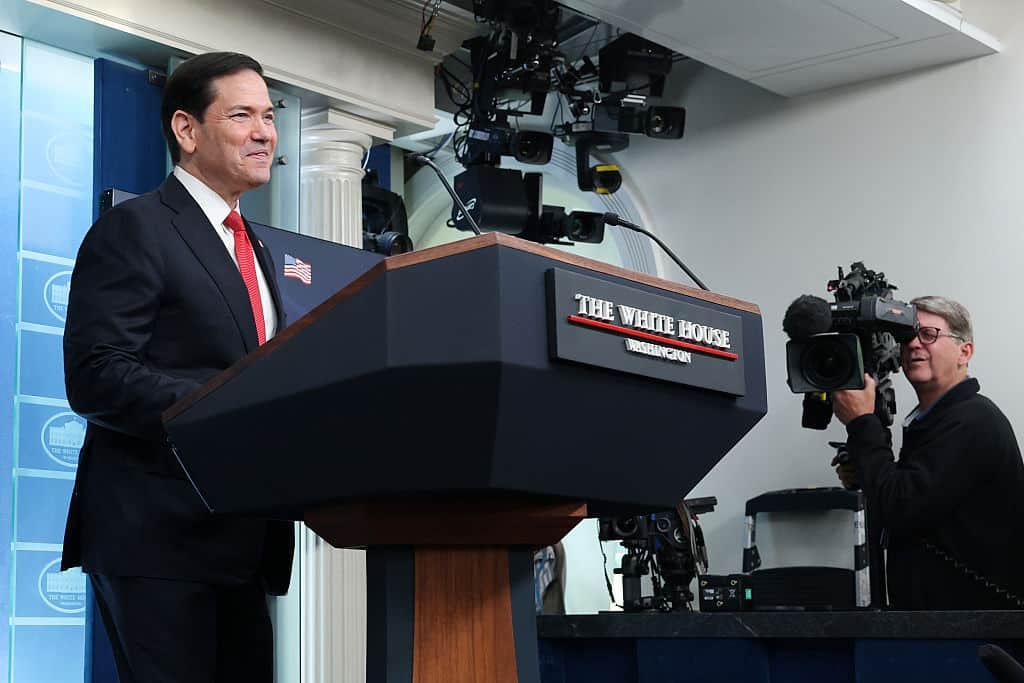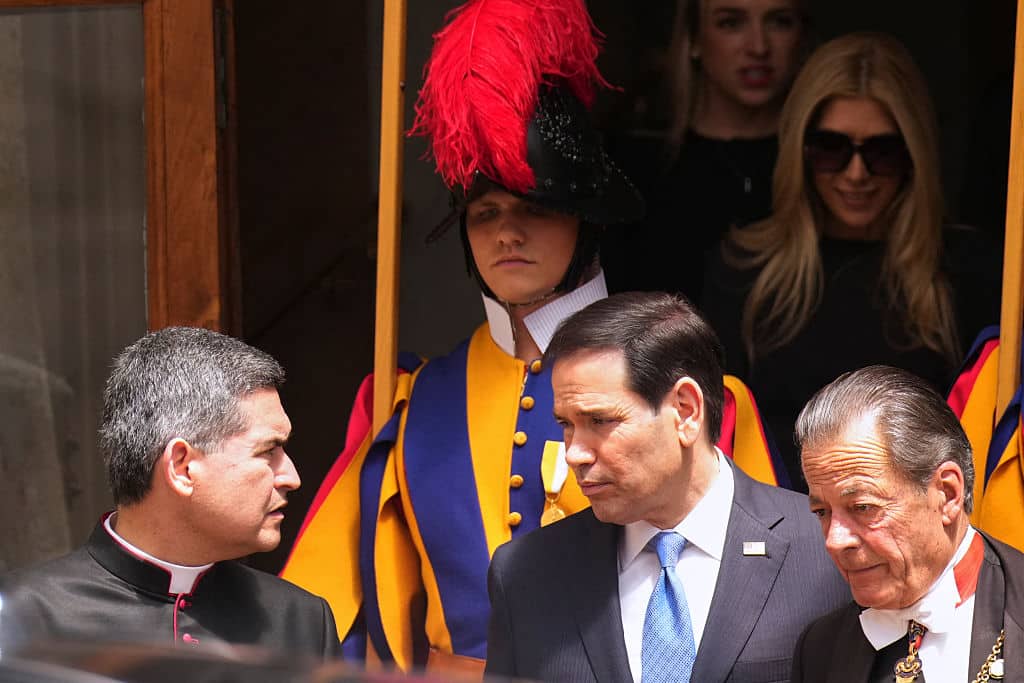
Marco Rubio is a Catholic man who flew to Rome and sat across from the new pope. That matters. Not as theater, but as texture — a reminder that the great questions of our time are not only strategic or geopolitical. They are, in some sense, moral.

The meeting was described as “friendly and constructive.” Both sides spoke of shared commitments to peace and human dignity. The State Department said the right things. The Vatican said nothing that contradicted them.
But underneath the diplomatic courtesy, something real was being worked through.
Pope Leo had spoken in April with unmistakable feeling about the suffering of the Iranian people — about the threat to an entire population, and about what he called a moral issue for humanity’s good. His words were pointed, and they were pointed at Washington.
President Trump, for his part, is not a man who softens when challenged. He sent Rubio with what he called a “very simple” message: Iran cannot have a nuclear weapon. Not now. Not ever. Not under any pope’s mediation, not under any diplomatic arrangement that leaves room for ambiguity.
“The entire world would be hostage,” Trump told reporters. “And we’re not going to let that happen.”
JUST IN: President Trump sends a "simple" message to Pope Leo ahead of Secretary of State Marco Rubio’s high-stakes meeting:
"It's very simple. Whether I make him happy or I don't make him happy: Iran cannot have a nuclear weapon."
"He seemed to be saying that they can. And I… pic.twitter.com/WFMInPqENU
— Fox News (@FoxNews) May 6, 2026
It is worth pausing on that. The president is not wrong on the underlying fact. A nuclear-armed Iran would represent a permanent shift in the architecture of global order. The question — the one the pope raised and the one that will not go away — is not whether to prevent it, but what price we are prepared to pay, and who bears that cost.
That is the conversation Rubio and Leo were having, even if neither said so directly.
The State Department called it the first significant engagement between the Trump administration and the new pontiff. There is something both hopeful and unresolved in that fact. The relationship exists. The tension exists. The door, at least, remains open.
“The meeting underscored the strong relationship between the United States and the Holy See and their shared commitment to promoting peace and human dignity,” said spokesperson Tommy Pigott in a statement.
Rubio left Rome with no reported breakthrough and no reported rupture.
In diplomacy, that sometimes passes for progress.