What set Supreme Court Justice Samuel Alito off was a dissent. Not just any dissent — one from his newest colleague, Justice Ketanji Brown Jackson, who accused the Supreme Court of trading principle for power and dragging itself into the middle of an election year.

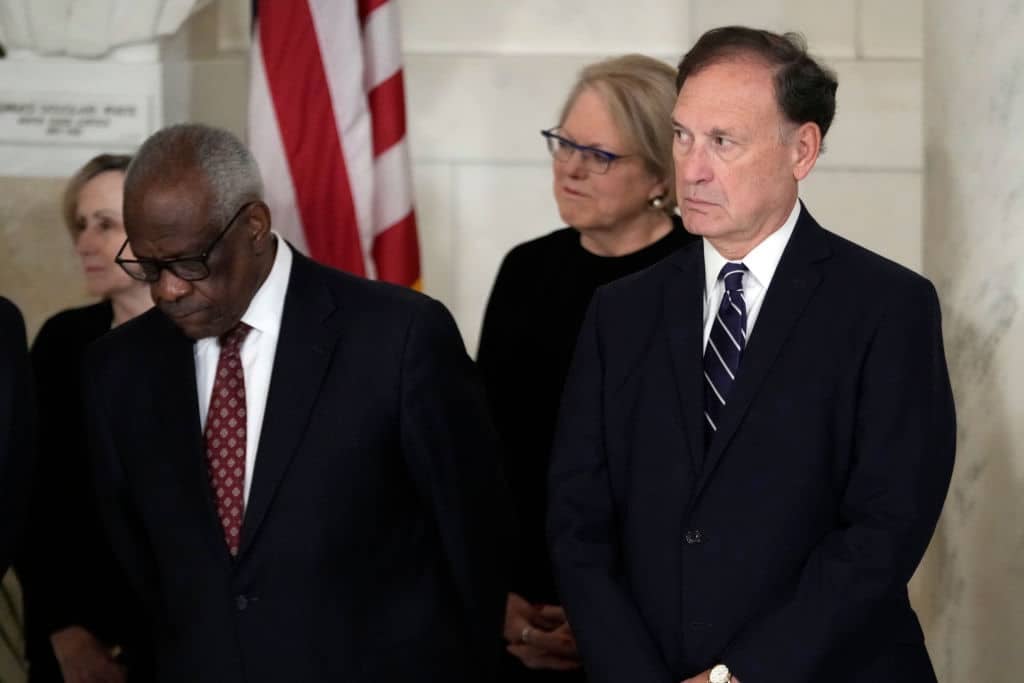
He answered her. Sharply. In writing. With Justices Clarence Thomas and Neil Gorsuch standing beside him.
The case was Louisiana. The map. The fight everyone in Washington had been watching.
A week earlier, the Court had struck down the state’s congressional districts as an unconstitutional racial gerrymander — a ruling that touches Section 2 of the Voting Rights Act and ripples out to every redistricting battle in the country. Now the justices had decided to let that ruling take effect early, skipping the 32-day waiting period the Court usually observes under its own Rule 45.3. Louisiana wanted to move. No rehearing was coming. Why wait?
Jackson thought there were plenty of reasons to wait.
She wrote that the Court was unshackling itself from its own constraints. That it was diving into the fray. That principle was giving way to power. She called the move unwarranted and unwise. And then, in the way dissents do, she said it: respectfully, I dissent.
Alito did not feel respectful.
“The dissent in this suit levels charges that cannot go unanswered,” he wrote.
He called her accusation that the Court had acted without principle “groundless and utterly irresponsible.” And then he turned her own word against her.
The dissent, he wrote, accused the Court of unshackling itself from constraints.
“It is the dissent’s rhetoric that lacks restraint.”
That was the sentence. The one court watchers circled. The one that traveled.
The stakes underneath the prose are real.
Republicans see a chance to reshape Louisiana’s congressional delegation before November. Democrats and voting-rights advocates see another loss in a long war over race, maps, and the Voting Rights Act. The map will be drawn. The clock is already running.
Legal scholar Jonathan Turley read the concurrence and said what many people were thinking. Alito, he wrote, had hit a breaking point. Jackson’s objection had put procedure above the practical need to finish what the Court had started.
Maybe so.
Or maybe a justice simply decided that some charges, when leveled in the United States Reports, cannot go unanswered.