It is a strange thing, the way America now keeps having to look at the unthinkable and call it by its proper name.

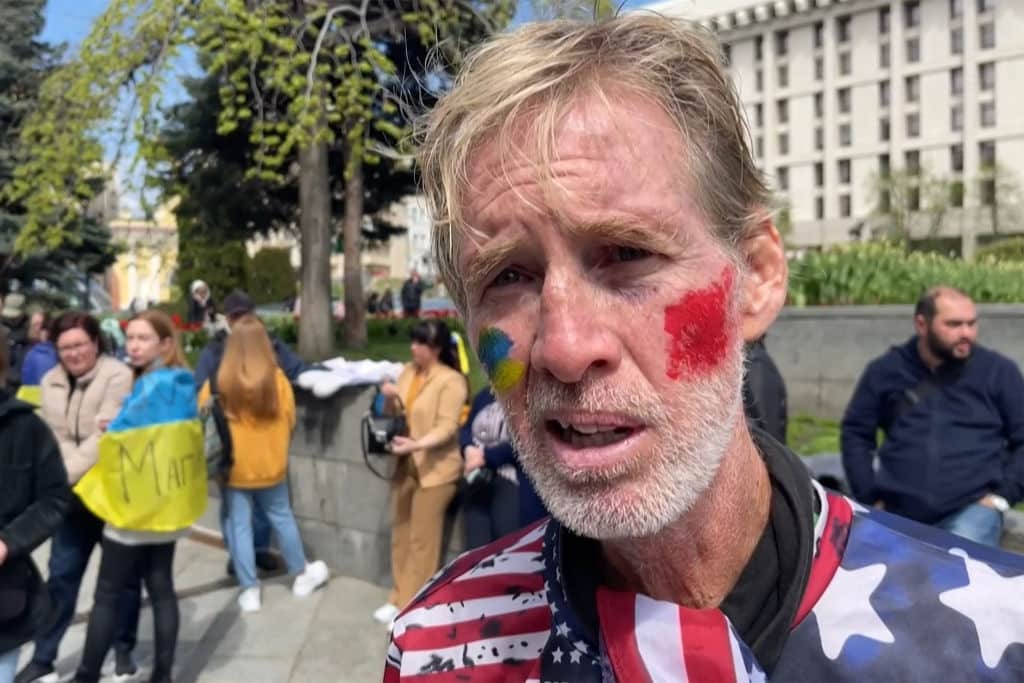
Ryan Routh was sentenced Wednesday to life in prison plus seven years for his 2024 assassination attempt against then-presidential candidate Donald Trump at Trump’s West Palm Beach golf club in Florida.
There are people who will insist this is just another case, another file, another defendant. It isn’t. It’s the modern American sickness — politics not as argument, but as extermination fantasy.
The sentence follows Routh’s September conviction on five federal counts, including attempting to assassinate a major presidential candidate, assaulting a federal officer, and multiple firearms offenses.
He is 59. Old enough to know what he was doing. Old enough to know what it would have meant, not only for one man and his family, but for a country already frayed at the seams.

Routh spoke for roughly 15 minutes during sentencing, repeating claims he made during trial, portraying himself as a good person, and citing alleged efforts in Ukraine trying to recruit fighters for its army.
This is often how it goes with the self-dramatizers: they are always auditioning, always explaining, always casting themselves as the noble figure in a story that never happened.
U.S. District Judge Aileen Cannon eventually stopped him and delivered her sentence, saying Routh intended to kill Trump and would have succeeded “if it hadn’t been for a Secret Service agent” who disrupted the plot.
That sentence—if it hadn’t been—is where the country should pause. The distance between order and chaos has narrowed to a human being doing his job, alert and decent in an instant.
Prosecutors pushed for the 59-year-old to get a life sentence, while Routh’s attorney, Martin Roth, asked the judge for 20 years in prison plus a mandatory seven-year sentence tied to one firearms conviction.
Roth told the court that Routh “stands by his plea of not guilty” and has “objected to any claim that he attempted to murder” anyone.
Lawyers do their work. That’s their job. But the facts are stubborn things, and in a case like this, the air itself seems to insist on reality.
“This would have been an easy kill. And the kill would have happened without [Secret Service] Agent Fercano,” Assistant U.S. Attorney John Shipley said. “This was intended to be a cold-blooded concealed kill… to make sure the American people didn’t even have the chance to vote for him [Trump].”
It is hard to read those words and not feel the deeper insult: not only the desire to kill a man, but to steal from millions the ordinary act of consent — the vote, the choice, the messy and sacred ritual that keeps the republic from becoming a street fight.
Roth countered that, “It would have taken less than an instant [for Routh] to pull the trigger, but the defendant did not,” adding, “At the moment of truth, he did not fire.”
And there it is, the defense’s thin reed: the weapon not discharged, the trigger not pulled. But plots are not absolved by interruption. An attempted drowning does not become kindness because someone drags the victim back to shore.
Judge Cannon rejected that argument, pointing to Routh’s prior arrests. Roth responded, “He’s a complex person, I’ll give the court that, but he has a very good core.”
“Complex” is what we call people when we are trying not to say what we see. We have become a country that speaks in euphemisms even when the stakes are life and death.
Routh later read from a prepared statement, claiming he tried to be “a good American” and asking to be exchanged for a list of political prisoners around the world.
About seven to eight minutes into the statement, Cannon interrupted and asked how much longer it would take. Routh replied that he had about 20 pages, timed for roughly 30 minutes.
A courtroom is not a stage, though some defendants will always try to make it one.
“I never drank, never smoked, never did drugs,” Routh said. “I gave every ounce of myself to make America a better place.”
Cannon cut him off before he could finish.
“It’s clear to me that the guideline of life imprisonment and the minimal mandatory sentencing is in order,” the judge said. “Your plot to kill was deliberate and evil,” Cannon added. “You are not a peaceful man. And your criminal history shows it.”
That is the voice of the law trying to sound like a boundary again.
And maybe that is the point of the sentence—life plus seven—not only punishment, but a statement to the rest of us: this is what a civilized country does with those who decide politics should be settled by murder.